Takeaway websites that take the order
A menu someone can read on a phone in the queue outside, and an order they can place without anyone leaving the fryer. Built so the search engines read it as a genuine local takeaway rather than a template with a menu bolted on.
Takeaway trade concentrates into two narrow windows a day, and in those windows every phone call pulls a member of staff away from the fryer while every queue at the counter is a customer deciding whether to wait. That is the whole problem in one sentence, and it is not a marketing problem — it is a throughput problem that a website can genuinely solve.
The marketplace apps solve it too, and they solve it well. They also take a commission on every order and keep the customer relationship, which is fine for discovery and expensive as your only channel. A shop that owns its own ordering page keeps the regulars on it and uses the marketplace for what it is actually good at: finding people who have never heard of you.
Nobody types a restaurant’s name into a search box before dinner. They type fish and chips near me and pick from what comes back — and whoever loads fastest with a readable menu tends to get the order.
The search that decides itThe job
Three things the site has to do before anything else
In that order, because the second one cannot help you until the first one has happened, and neither matters if the third never brings anyone.
Show the menu, instantly
The menu is the page. Prices readable without pinching, categories that match how people order, and a first paint fast enough to survive a phone on mobile data outside your own shop.
Take the order without the phone
A checkout flow built for speed during service, not for a leisurely browse. Collection and delivery handled distinctly, and orders arriving somewhere the kitchen will actually see them.
Be findable for the local search
Consistent location signals, valid local business markup, and content built around the terms people in your town actually type — so you appear among the options rather than only being found by name.
Scope
What’s included
Menu-first build
The full menu structured as content rather than a PDF, so it loads fast, reads on any screen and search engines can see every item on it.
Mobile ordering
A checkout designed for someone standing up, one-handed, in a hurry. Measured against Core Web Vitals on throttled connections, not desktop broadband.
Local structure
Valid LocalBusiness markup, opening hours, and content built around the town you serve, so the shop reads as a genuine local takeaway.
Orders that arrive
Orders and enquiries routed somewhere you’ll see them mid-service — email, WhatsApp or a printer — rather than a dashboard nobody opens.
In this trade
A chip shop we built for
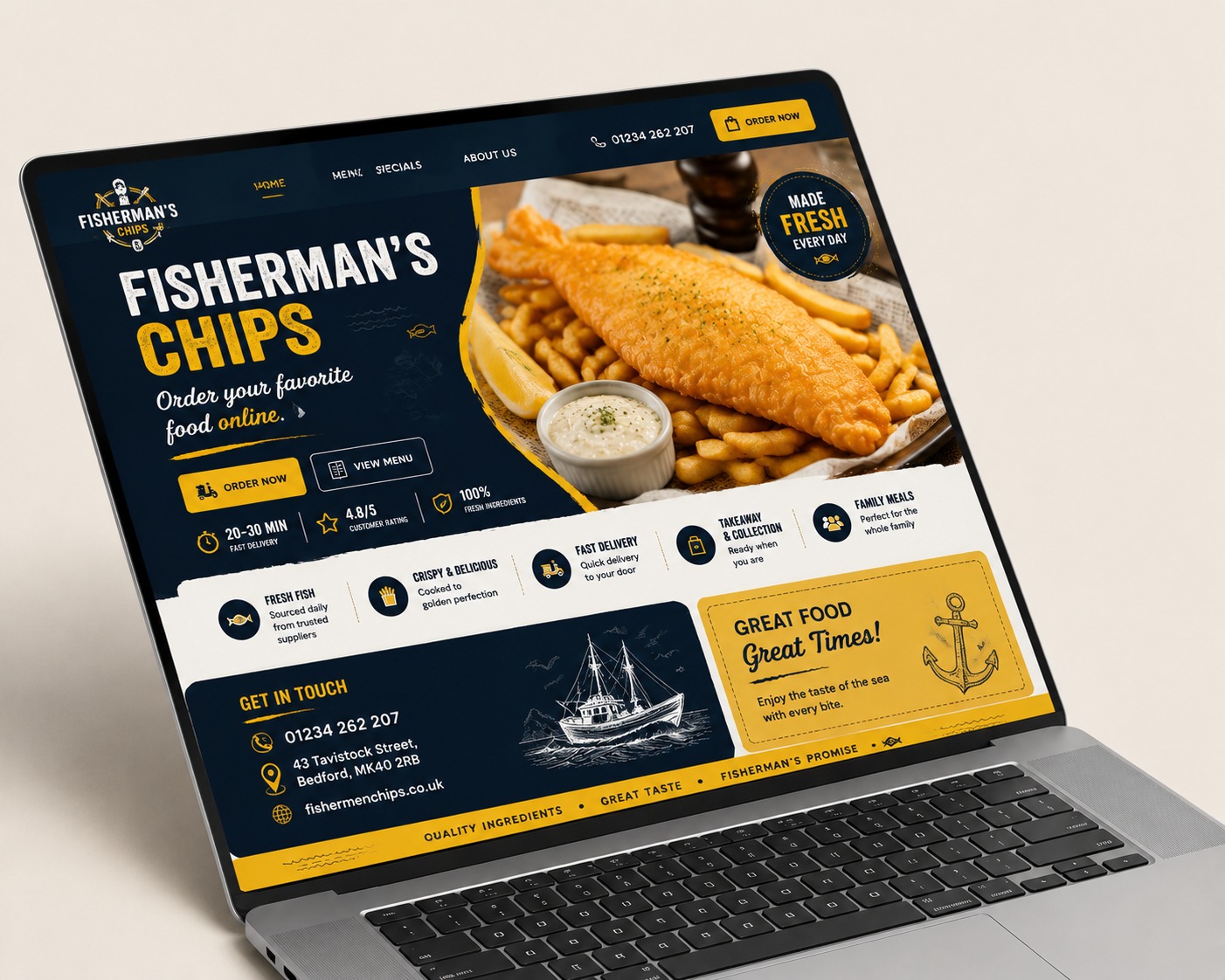
Cost
Published, so you can decide now
Most takeaway sites land in the five to ten page band — home, menu, ordering, about, contact, and a page for the area you serve. Ordering flows and payment integration are the parts that move a quote upward, and we say so before you commit.
All of it negotiable, and fixed in writing before any work starts. See the full pricing page for what counts as a page and what moves the number.
Questions
Straight answers
Can I take orders without paying commission on every one?
Yes — that is what an ordering page on your own site is for. A marketplace charges a commission on each order and owns the customer relationship; your own ordering page charges you nothing per ticket and the customer stays yours.
The sensible position for most shops is both. Use the marketplace for discovery, because it genuinely is good at putting you in front of people who have never heard of you, and give your regulars somewhere better to order from once they have.
Do you build the ordering system, or plug in someone else’s?
Either, and we will tell you which one fits before you commit. A custom flow gives you full control and no per-order fee; an established ordering or payment provider gets you live faster and handles card processing and compliance for you.
The right answer usually depends on order volume and how much of your menu changes week to week.
Can I update the menu myself?
Yes. Menu prices change and a site you have to email someone about is a site that goes stale. How that is set up depends on the build, and it is one of the things we agree in the scope rather than leaving you to discover afterwards.
Will this actually get me found for searches in my town?
It gives you a genuine chance, and nobody can honestly promise more than that. What the build does is structural: consistent location signals, valid local business markup, opening hours, a fast site on mobile, and content using the terms people in your area actually type.
The other half is your Google Business Profile, which for a takeaway is often seen more than the website is. It needs to match the site exactly, and it costs nothing.
How long does it take?
A typical takeaway site runs two to four weeks depending on how much of the menu and photography already exists. Ordering and payment flows are scoped alongside it. You get a timeline with the quote, before anything begins.